By Martin Simoncic, CEO, Zywave
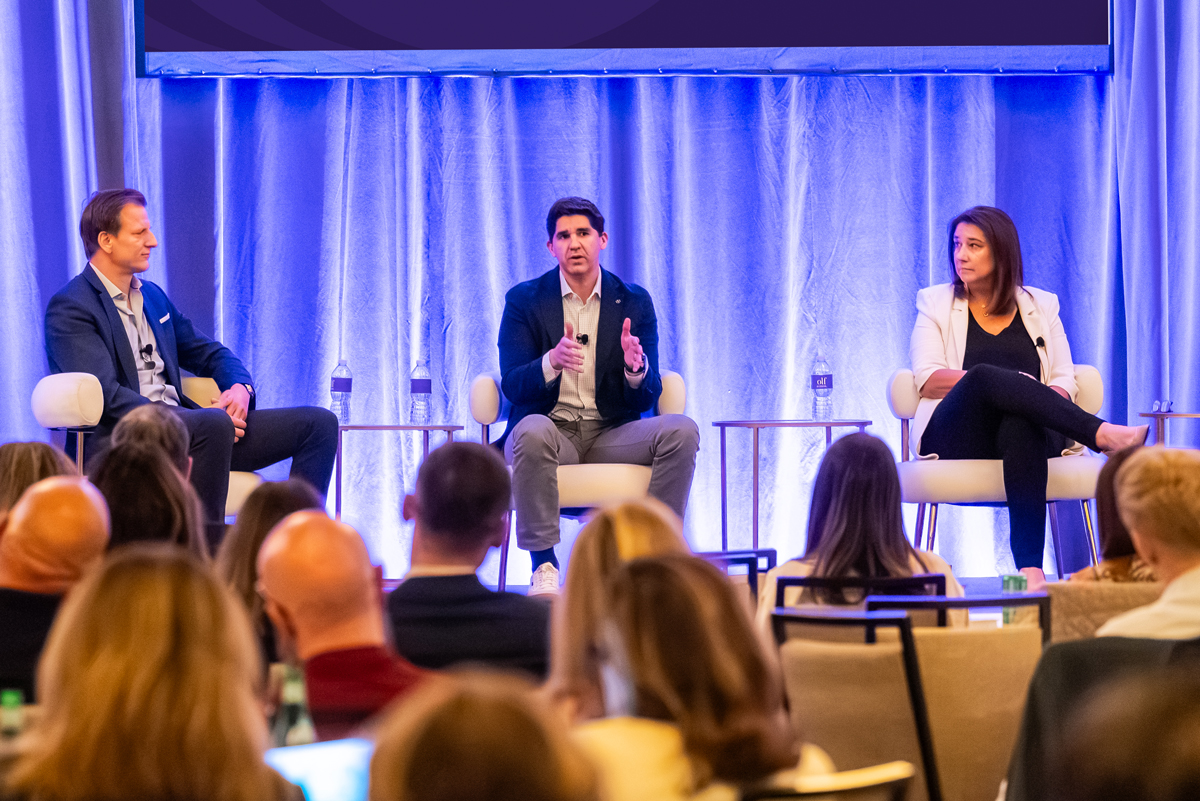
Last week, I participated in CIAB’s OLF 2026 Industry CEO Panel talking about current state of today’s broker-focused technologies, impact of AI, and how the broker of the future will operate. It was an invigorating room to be in, a mix of executive and operational leaders who live with these systems every day.
Our discussion revealed a lot about the future of the industry as well as the way we at Zywave are actively supporting brokers by enabling a more connected, scalable tech stack.
The AMS Was Never Built to Deliver Advice
One question from the panel struck a chord early on. If the AMS is the system of record, where does the data that drives advice, client engagement, benchmarking, risk insight, and carrier information really live?
My response to this is that the AMS was built to record and bill accurately, not to produce advice. Advice is the producer’s job, and the producer doesn’t typically spend their day in the AMS. That data lives somewhere else, and for most brokerages, the path forward is partnering with providers who connect it to the systems producers already work in, not building that intelligence layer alone.
Organic Growth is Critical to the Broker’s Valuation
So much of the AI conversation in this industry stops at efficiency, doing the same work with fewer people. As I highlighted on the panel, this bypasses the critical discussion about organic growth.
Our own Broker of the Future research revealed that a traditional agency runs on roughly $175,000 of revenue per employee, while an AI-native broker is capable of running closer to $1,000,000, six times as much. We are already seeing some firms encroaching on these aggressive goals. These AI-native firms are growing their businesses faster than they’re growing their headcount by using AI as a lever.
This is starting to play out with our own customers via more meetings and new logos on the new business side, deeper cross-sell and higher limits with existing clients, and sharper advice and risk management at renewal. We’ve watched producers get back multiple hours a week that used to go to manual prospecting, time that’s now going straight into client conversations instead. This is the kind of result that indicates something is working, and these growth stories from customers are a clear indicator of where this industry is heading.
What Does an “Open” Platform Mean?
The industry is having a lot of conversations about what it means for a platform to be “open” or “connected,” and it came up on this panel as well. To me, the real test comes down to the customer’s data. If it’s the brokerage’s own policy data, the brokerage should be able to read it and write it back through their chosen tools.
It’s easy for any of us in this industry to describe a connection as open when it’s one-directional or limited to part of the data. A half-open connection leads to a disappointing experience. At Zywave, we believe your data should be accessible within our systems at every level, without restriction. We intentionally build it to be easy for other parties to connect to, pull data out of, and put data back into, not just a controlled slice of it. It’s a commitment that takes more work to maintain than a cracked-door version of “open,” but we stand by this approach.
Zywave’s Commitment to Insurance Industry Professionals
The last question asked each of us for one concrete commitment, one operating principle that we’re prepared to stand by in the coming years that can reduce complexity and make it easier for brokers to grow.
Ultimately, my commitment, and the commitment we’re focused on at Zywave, comes down to three things: put the technology to work so manual tasks come out of your day, build around real openness so your data stays yours, and keep partnering across the ecosystem. Because no single provider, Zywave included, can be everything a brokerage needs.
Read the full Broker of the Future report for more on where I believe this industry is headed next.